Unfinished Business

img_2941

One of my good friends, “Mike”, recently told a story. In the past, Mike and “Charlie” had become very good friends. They had much in common and their families enjoyed activities together. Mike and Charlie often met for meals and, essentially, shared life’s ups-and-downs with each other. That all ended when Mike and Charlie found themselves on opposite sides of a community issue. Both were passionate about their position and, eventually, they drifted apart until they rarely spoke or saw each other except at community events. About a year ago after Mike had moved to another city, he just felt compelled one day to reconcile with Charlie. Mike was visiting from out-of-town and intentionally sought Charlie at an event they were both attending. Mike spoke with Charlie, they shook hands, and both admitted that they missed their friendship. Sadly, Charlie recently died. Mike said that had he not sought to reconcile with Charlie, he would have lived the rest of his life feeling as though there was “unfinished business” between him and Charlie.

Unfinished business… I have always been a list-maker. I create a “to do” list and work through the list until I can check off every item… typically, the same day. At the end of a day when something was not checked off the list, I feel as though something is undone. However, at the end of each day, you can be pretty confident that tomorrow is another day and another opportunity to clean the slate.

There are times, however, when you might never have that chance to finish a task that you know you wanted to complete or needed to complete. Had Mike not made a special effort to reconcile with Charlie, the opportunity would have been lost forever.

Unfinished business can exist in a year, in a career, or in a life. I remember a former colleague named David. David was very good at his job, but had decided early in his career that he was not open to relocation, even for a significant promotion. David did well in his career, but always wondered how things might have been different had he and his family been open to relocation. I remember David seeing others, with less ability and potential, pass him by in his career simply because they were willing to relocate. Though David made the decision he felt was best in his career, he always wondered if his career was limited… if there was unfinished business.

Life open poses opportunities to make new friendships, restore broken ones, or to express unspoken thoughts and feelings. Then, when we look back, we feel that somewhere along the line, we had business to do that we left undone.

So, think about any unfinished business in your life today. This might be a good day to begin checking those things off your list. In case you aren’t immediately thinking of any unfinished business in your life, let me list a few possibilities in the hope that you might become motivated to finish today, what you should have done weeks, months, or years ago. Losing the opportunity you have today may remain one of your life’s great regrets.

Which of these do you need to do today:

  1. Call or send a note to your aging parents or grandparents. How I wish I could speak to mine just one more time!
  2. Spend some quality time with your spouse, son, daughter, grandchild, or other loved one. Don’t forget to tell them what they mean to you!
  3. Make that overdue call or send that note to a friend, colleague, or acquaintance. Don’t assume that you’ll have another chance next week because those chances rarely come. Tell that person what they mean to you and thank them for being a part of your life. There is someone in your life that needs to hear from you today.
  4. Organize your life. Don’t leave a mess for someone else to clean up!
  5. Volunteer to meet a need for someone else or an organization that does good work. If you wait until the timing is perfect, you’ll never do it.
  6. Don’t assume that your spouse knows how much you love them. Make sure that there is never any doubt that you do! Tell them… and do it often!
  7. Find a way to serve someone else in a special way. It might be someone that has gone above-and-beyond for you. It might be someone that could never repay you. Don’t ignore or waste a chance to make life better for someone else.
  8. Do that special project you have been promising to do. Why wait when you know you can and should get it done!
  9. Thank a teacher, police officer, military veteran, mentor, or emergency personnel for their service.
  10. Take time to do something you’ve been wanting to do for yourself. If you had started taking guitar lessons five years ago when you wanted to, you would be pretty accomplished by now. Don’t let another five years go by without adding a new skill, experiencing something new, or gaining that new knowledge you’ve have had on your own list.

Consider the unfinished business that exists in your life today and challenge yourself to get it completed soon. Today might be the only chance you’ll ever have to make it happen.

At the end of the day, everyone sleeps

Owen (Baseball)


“Isn’t it weird how everyone goes to sleep at night? Like, everyone in the whole planet. All these people, people I’ll never know—some are poor, some are rich; some sleep in beds, some sleep on the floor. But at the end of the day, everyone sleeps. – Deja, “This is Us” S2E17, 2018

In a world caught up in equality, diversity, inclusion, and rights, there is probably no greater equalizer than sleep. No matter who you are, where you came from, your past, your future, your status, your position, your genes, or your bank account, we all must sleep at the end of the day.

Why is it so hard to get along? Why do we struggle so mightily to understand each other? How can we learn to be better leaders, parents, friends, or neighbors? I believe that everyone, no matter where they live or what they do, has seven basic desires that determine our overall happiness. When we understand these, it can help us understand, work with, live with, and deal with each other better. When we know these seven things and can help each other achieve them, we have taken a huge step in being successful and helping others to achieve their goals.

So, let’s take a look at my “Seven Happiness Factors”. How does my list stack up to yours?

Seven Happiness Factors

  1. Basic physical requirements (air, food, water, warmth) – The firsts and, perhaps, most important human desire is that the basic physical requirements for life are met. No one can excel when they are hungry. You can’t expect an individual to do their best or give their best if they are consumed with fulfilling these basic needs. When we can step back and see the needs of others AND address them, we earn the right to be heard. By meeting these needs, we alleviate a burden that, quite possibly, we struggle to even understand.
  2. Respect (fair treatment) – Everyone wants to feel that they are being treated fairly. When we are treated fairly, we become motivated to do our best. The opposite is also true… when we are not treated fairly, we are demotivated. Giving others a chance to excel, to speak up, to participate, to learn, to advance, to contribute, or to gain what they have earned builds a culture of character and integrity. The best way to understand how to treat others is to invoke the Golden Rule: Treat others the way you yourself would want to be treated. When we do this, we nurture an environment where everyone can do their best.
  3. Freedom (the ability to pursue happiness) – No one wants to feel that they do not have the ability to pursue those things that brings them happiness. Having the freedom to make your own decisions (with limits, of course) gives a sense of empowerment that everyone craves. Being able to make choices, whether you eventually make good ones or not, gives individuals a sense of liberty that can’t be fulfilled in any other way. When we allow others a sense of freedom, we unleash their abilities to do more and do it better.
  4. Opportunity (a chance to excel) – In addition to freedom, everyone wants to ability to do better. No one thrives in an environment in which they feel that life will never get better or that their chances to do more or have more influence don’t exist. When individuals are allowed to chart their own future path, their level of contentment usually rises.
  5. Love (someone that cares) – Despite what some may say, everyone desires and needs others in their life that care. We want others to enjoy our company. We want companionship (again, with limits) and most of our favorite memories involve other people. In the workplace, when you show others that you care about them as individuals… that you care about what is important to them… they are more loyal, work harder, and are more motivated to achieve success. A person-to-person connection is essential if you hope to create a positive place to be, live, or work.
  6. Purpose (something meaningful to do) – We all want to feel that we are making a difference. We want our work to be important. We want our efforts to have meaning. When we help others see the purpose in what they do or find their purpose in living, we accomplish much in the life of that person.
  7. Hope (something to look forward to) – Just like the children are about Christmas, we all enjoy and need something positive to look forward to. We need to have a hope for our future. We need to have a goal that we are striving to achieve. We need to pursue an accomplishment. When we help others find hope or see the positive in their future, we give them a gift… a gift that provides encouragement. We also have a need to understand our eternal hope. For those struggling to understand how to have that kind of hope, I encourage you to read a previous edition of The Porch that you can find here (What is your hope?).

Deja was right when she said, “At the end of the day, everyone sleeps.” And, for us as humans, there are things that, when we don’t have them, cause our lives to be chaotic, unfulfilling, unmotivated, or unhappy. When we help others to achieve these Seven Happiness Factors, we help them become more content, more productive, and more positive.

Think about what you can do today to make a difference in the life of someone else.

Responding to “Shoulder Taps”

shoulder tap

I recently ran across a short video by a gentleman named Bill Hart called “Shoulder Taps.” A link to the video is provided below. In short, Bill discussed a recent experience in which he felt led to compliment a complete stranger in a restaurant. As a result of responding to his “shoulder tap”, he changed the day for two people… the lady he spoke to and, more significantly, himself. Take the less than three minutes needed to watch Bill’s video.

I think we have all had a shoulder tap at one time in our life. Probably, most feel a shoulder tap almost every day. Bill Hart defines a shoulder tap as a prompting, possibly from God, leading him to act… especially when he would not have acted otherwise. In this particular example, he was prompted to compliment an elderly lady.

When did you last feel a tap on your shoulder? I was recently on vacation. On the first or second day of a week at a resort, I felt a shoulder tap to sit next to and speak with a man at the pool. First of all, I am not typically the kind of individual that automatically looks around seeking a stranger with which to strike up a conversation. But on this day, I was led to a particular man… again, one that I would not have typically sought. To shorten the story, I ended up really liking this guy and my wife and I sat near him and his wife every day the rest of the week. They were a nice couple that had a lot in common with us. I would never have sought him out without that shoulder tap that day.

I remember back in my working days going to endless meetings that often led to no outcome of value. Somewhere along the line in my career, I decided that, even if the meeting was unlikely to have value for me, I would seek an opportunity to say something or extract some piece of information that made it worth attending. Often, early in the meeting, I would feel a “shoulder tap” that prompted me to ask a question or make a comment that helped focus or refocus the direction of the meeting. On those occasions that I responded to that tap, I almost always left the meeting feeling that it either had value for me or that I created value by my question or response. In other words, when prompted to speak up, I tried to do so. And, when I did, it helped me or others. It is so tempting to just sit through the meeting watching the clock and hoping for a speedy end. However, when you are intentional about making a contribution, it can make your time well spent.

There are other times when you “just have a feeling” that someone you know (a colleague, a friend, a family member, a neighbor, or, even a stranger) needs a special touch from you. A kind word, a sacrificial act, encouragement, or tangible help can often make the difference in the day or life of that individual. When we respond to that “shoulder tap”, we are taking a step in faith that we are standing into the gap for that person. You may never know how much a simple word of encouragement can be for someone struggling through a tough time in their own life. You never know the difference that you can make to someone with a simple kind act.

So, today, my friend, think about how you will respond the next time you feel a “shoulder tap.” Will you merely ignore it or think that you are imaging it? Or, will you, like Bill Hart, respond and, in the process, make a difference in the life of someone else. Let’s start looking for how we can make a difference in someone’s life. The words of John Bunyan, the author of the classic Pilgrim’s Progress once said:

‘You have not lived today until you have done something for someone who can never repay you.’

Bunyan’s words may never be truer than when you listen… and respond… the next time you feel a “shoulder tap.”

Have a great day!

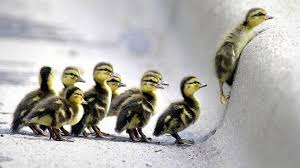
Let’s play “Follow the Leader”

follow the leader

Do you remember the game we played as kids called Follow the Leader? I remember it well. The leader would take the followers over the toughest course possible in an effort to find something the others simply couldn’t do. When you reached that point, you essentially won the game. In our yard, the leader would climb the redwood fence and walk along the top for a section or two, jump into the rose bush, shimmy up the swing post and crawl on top of the swing, fall face first into the mud puddle, chase the neighbor’s mad dog, then race over and back across the street dodging traffic in an effort to find something the other kids could not do. Needless to say, we were reckless… but, competitive!

Let’s take a look at this game from the perspective of adults striving to be successful in today’s competitive corporate world or in any other situation involving leaders and followers. We’ll look at the game from both perspectives…

Being a good Follower

  1. A good follower keeps the ultimate target in view – When we participate on a team, group, or family, there is usually a target or purpose for what we do. It is important, as a follower, that we understand our purpose and keep our eyes focused on it.
  2. A good follower is focused on the leader – Followers need to trust their leader. Unless we remain focused on the leader, we are likely to take our own path which may not be the proper path. Keep your eyes on the one you are trusting to take you to the end.
  3. A good follower supports both the team effort and individual members – When we support others, we all become better. A good follower understands that no individual can truly be successful unless the team succeeds.
  4. A good follower is competitive – A good follower is driven to win! And, that desire to win will drive the follower to support the team, pull more that their share of the effort, and never give up.
  5. A good follower communicates vertically and horizontally – A good follower is in constant communication both with his/her teammates and the leader. A good follower also is not afraid to voice an opinion and avoid group think. The best teams are the sum of the best parts of the individual members working together.
  6. A good follower remains optimistic even in the face of adversity – Never give up! Many victories have been won simply because the team failed to consider defeat.
  7. A good follower does more than their own fair share – When each member does their share and more, the output of the team multiplies. The best teams apply the rule of multiplication, not addition.
  8. A good follower stays committed to the end – Good followers do not desert the team. They stay focused and dedicated all the way across the finish line.
  9. A good follower is loyal first to the team – Loyalty builds trust and the best teams trust the most.
  10. A good follower is intellectually involved – A good follower is never afraid to speak up when needed. He/She will not just blindly follow without being invested fully.
  11. A good follower has fun – The best teams enjoy what they do… they have fun! A good follower is not afraid to express humor and enjoy the journey.

Being a good Leader

There is much to learn from Follow the Leader for us today. Imagine, in our game of Follow the Leader, that all the followers are blindfolded. They cannot see the leader. What kind of result would you expect? Here are a few key components of a good leader:

  1. A good leader casts a vision – It is important for any team or group to understand where they are going and what it is they hope to accomplish. Without a vision, the members and team will tend to flounder and quickly fall off track. And, members will lose interest.
  2. A good leader is visible – You can’t be a good leader unless you are seen. Members need to personally experience your vision, your character, and they queue off your actions.
  3. A good leader communicates – Team members must hear from the leader. Thus, a good leader does not assume that members have all the information they need. It is always better to over-communicate.
  4. A good leader gets personally involved – The very best leaders are not afraid to get their own hands dirty. They are willing to fall into the mud hole, if needed. Member needs to see that the leader is personally invested in the result and will do whatever it takes to achieve the goal.
  5. A good leader is bold – A good leader will take reasoned risks. Winners do not always just play it safe. Sometimes, you need to go outside the normal boundaries to achieve what is needed… even if it involves some personal risk.
  6. A good leaders thinks outside the box – Good leaders often offer or solicit unique approaches to problems. Looking at situations from unusual viewpoints is often needed to see a new approach.
  7. A good leader is encouraging – Good leaders constantly encourage the members of the team. They understand that the best performance only occurs when members are constantly motivated and feel their efforts are appreciated.
  8. A good leader is competitive – The best leaders hate to lose! And, to win, they know that progress needs to occur every day. Finding a way to be better, cheaper, and faster is a constant motivation.
  9. A good leader allows individuality and creativity – A good leader allows members to flourish individually, provided that individual results help, not hamper, the team. Allowing creativity encourages synergism.
  10. A good leader celebrates individual and team successes – A good leader knows that victory doesn’t come every day. Thus, he/she knows that when victories do come, they need to be celebrated.
  11. A good leader has fun – Individuals follow a leader best when they feel fulfilled and have fun. Making the effort fun is essential for success.

Each of us functions as a follower and a leader. So, it is good to refresh our understanding of what it takes, from both perspectives, to be completely successful. Just like the Follow the Leader game we played as kids, life demands that we embrace our roles and play them well for the team or group to be successful.

Think about your own situation as a follower or leader. Are you good at those roles? What do you need to do differently to be better starting tomorrow?

When relentless becomes reckless

hummingbird

Successful individuals are often described as “relentless” in their pursuit of victory, completion of a difficult task, or dedication to an effort.  I have historically viewed a relentless person as one that has strong positive character traits, but I think it is possible to take relentlessness too far. The dictionary definition of relentlessness is “…unyieldingly severe, strict, merciless, rigid, or harsh.” So, is relentlessness good or can it be harmful? When does relentless become reckless? Let’s explore this…

I have had the occasion to watch hummingbirds visit a feeder at my home. Last year was a banner year for hummingbirds judging by their numbers. Anyway, our feeder has four slots where birds can hover and drink a sugary liquid. They can also visit flowers nearby. I would term the hummingbirds as relentless in their pursuit of food. They spend nearly all day coming to the feeder or flowers and seem to have few other interests. They have some rests from these efforts, but they are few and they don’t last long. Perhaps, hummingbirds must be relentless in order to survive. Despite this, hummingbirds exhibit a sense of caution. When feeding, they are constantly alert for danger and quickly flee when spooked.

There are also humans that have this same “relentlessness” in their pursuits. Some think of their work or career pursuits 24/7. I recently heard of one CEO of a start-up company that intentionally sent texts or email messages to applicants at odd hours (such as 9pm on a Saturday night or 11am on a Sunday morning) to test their responsiveness. If they failed to respond within three hours, they “did not fit the culture” desired by the CEO. When relentlessness goes too far, it becomes an obsession or an addiction… it becomes reckless. And, when that occurs, the individual’s life gets out-of-balance.

So, is “relentlessness” a good or bad trait? I think, like so many other things, that anything we do to the extent that it harms other areas of our life is bad. When we pursue our career to the detriment of our family, we have gone too far and recklessly endanger our relationships. Going too far is missing most of the key life events of our children, neglecting our spouse, or failing to nurture other relationships. However, being relentless (or undeterred) in completing a specific task is probably a good thing. For example, if you have a critical assignment that must be completed on schedule, it pays to be relentless in completing the task on time.

There are other examples of relentlessness that are admirable. Most of us have heard of or know individuals that have suffered a severe health crisis, yet were relentless to overcome the adversity they experienced. So, in many ways, being relentless to accomplish a specific task is a good thing. However, being described as a relentless person (that is, one that pursues something “in an unyieldingly severe, strict, merciless, rigid, or harsh” manner) with no regard for balance is probably a negative thing.

Here are a few character attributes that we should strive to exhibit in our lives that communicate in the same way as relentlessness:

  • Persistent – ability to stick to a task until it is completed, even in the face of failure
  • Diligent – can be relied upon to complete assignments in a high-quality manner
  • Reliable – true to their word
  • Dedicated – committed
  • Focused – aligned with the target at hand

We should pursue “appropriate and timely” relentlessness. We should also be aware that even the hummingbird takes a break. Relentlessness must be used only for important tasks or efforts. It is difficult to sustain indefinitely.

Crossing the line of relentlessness to recklessness is a small step. When we do, we become:

  • Careless – sloppy, ignoring appropriate risk
  • Thoughtless – lost focus on the target or goal
  • Impetuous – petty and wasting time on unimportant tasks
  • Impulsive – jumping to conclusions or irrational actions
  • Irresponsible – failing to fulfill basic or expected responsibilities
  • Foolhardy – making unforced errors

Bottom line… we should be relentless to accomplish needed tasks when they are important, meaningful, and impactful to ourselves or others. However, exercise the caution of the hummingbird… be alert. Don’t cross the line from relentless to reckless.


Someday, “the last time” really will be the last time

img_4513

The other day, my wife was holding our four-year-old grandson on her lap reading a book. Typically, he has too much energy running around the house to slow down for a book, but this time, he remained quiet and interested as she read. I made the comment to her that someday soon, he won’t be interested enough to sit on her lap and read… someday soon will be the last time.

Have you ever paused during an event and savored it as probably being the ‘last time’? Often, we don’t realize until later that ‘that was the last time we ever…”. There are times, however, when we know for sure we are experiencing one. I remember my son’s last football game in high school. It was a year end elimination game and it became obvious early in the second half that his team would not advance to the next game. I remember lingering on the field after the game well after the teams had left the field. But, I just couldn’t leave because I knew I was experiencing a bittersweet ‘last time’.

I remember the night before the weddings of each of my daughters thinking, “This is the last day before I place my daughter’s hand into that of another.” I remember the last day I had my dog Rudy, knowing he would be gone the next day. That night, Rudy was allowed to eat anything he wanted!

More frequently, we only realize later that the ‘last time’ was the last time. I remember saying goodbye to friends or colleagues not knowing this was likely the last time we would ever see each other. Who could have known that two of my basketball teammates would play well in their last game before they would die? How was I supposed to know the last time I ever hit a home run in baseball? Somehow, we think that things will always be the same, but life just keeps moving along.

My intent today is not to discourage, but to encourage you. I am merely reminding us all that we should never take the good things of life for granted. Let’s be aware of life’s changes and savor them. Let’s live in such a way that we don’t look back with regret. After all…

  • Someday, your last child will ‘leave the nest’
  • Someday, you will change a diaper for the last time
  • Someday, when you hang up the phone, you’ll be thinking of that last time with someone you love
  • Someday, that last day at work will usher in a whole new chapter of your life, hopefully, filled with ‘first times’
  • Someday, you will play catch with your son or daughter for the last time
  • Someday, you will sitting around a table laughing about those stories he used to tell
  • Someday, you will make a mortgage payment for the last time
  • Someday, you will walk for the last time without help
  • Someday…

But, for today, let’s make the most of what life brings. Let’s not worry about tomorrow. Today is the only day we have been promised. So, make a call, write a letter, schedule some fun, play hide-n-go-seek, and savor the minutes because we never know when the last time might really be ‘the last time’.

The miracle of rain in our lives

rain

This morning, we saw the sunshine for the first time in over a week here in eastern Missouri. The pond in my backyard was nearly full of water for the first time in months. The wild turkeys were playing a game of tag. The squirrels had a new skip in their step as they ran across the yard. The grass was almost showing a glint of green after a long, cold winter.

It was a wet week at our house. We had nearly a week with clouds, rain, fog, and a bit of sleet without sunshine. It is well known that in climates that lack sunshine, there is a higher incidence of depression and hopelessness. You begin to wonder, after several days of clouds and rain, if there will ever be another day of sunshine. You can almost feel yourself develop a sense of hopelessness after an extended period of sunlessness.

But, that early spring morning after a rain, like today, should give us a reason for hope. Seeing nature come alive after the rain is our payback for those dreary days. In many ways, especially after a period of drought, rain works a miracle in the life of nature. It refreshes, provides nourishment, and injects a dose of hope in what may have been a difficult period.

In the same way, we may experience periods of rain in our own lives. In fact, we may even experience an entire rainy season that can deplete us of energy and cause despair, defeat, and discouragement. For some, these periods of rain can become so severe that they literally lose hope. Today, I want to encourage those of you in the midst of such a season to look at the miracle of rain in our lives. When we realize the purpose of rainy days or rainy seasons is to provide nourishment and refreshment, our perspective changes. When we realize that the sun will eventually shine, we can have hope that our lives will be refreshed and a period of growth will occur.

Let me give an example… For the last 8 months we have experienced a period of drought at our home. The water level in the pond in our backyard was declined 2-3 feet. There were areas along the shore that had receded 12 feet or more, exposing mud, rocks, and clay. Not only was this unsightly, but it was starting to become a concern for the fish and other wildlife in the pond. However, in just a few days of rain, the pond water levels had nearly returned to full pool levels. A few days of rain had completely erased the impact of 8 months of drought. The “season of rain” has provided a completely fresh perspective on the pond and wildlife around it. On the other side of the rain, nature celebrated.

The same can be true in our lives. On the other side of the rainy period you may be experiencing, is a time of celebration. The miracle of rain to clean, refresh, and replenish will be evident in your own life. Be patient and trust that a day of sunshine will come to you and you will experience the miracle that comes to your life.


My relationship with Veronica from Member Services

veronica

I’m going public today. I’m admitting something that has been going on in my life for a couple years now that no one, outside my wife knows. Here it is… I’ve developed a relationship with Veronica from Member Services.

It started with a single phone call. I’m not sure how she got my name, much less my phone number. But, the first time we talked it seemed like she knew a lot more about me already than I knew about her. Now that you mention it, there is still quite a bit that I don’t know about her.

My wife knows about Veronica. In fact, Veronica even calls her sometimes. I don’t think it bothers her at all that I’m a happily married man. She continues to call at any time of the day or night. Pretty bold, eh?

Pretty soon after our relationship began, Veronica’s calls started coming more and more frequently… once a week, once a day, once an hour (at least, it seems). Though Veronica and I get along pretty well, her persistence worries me. It has almost gotten to the “stalker” stage.

Finally, a few months into it, I decided to call it quits. She seems so “robotic” at times that I just thought we needed some space. So, I asked her to stop calling. I even tried talking to her work supervisor, but she continued calling. So, I decided to go “nuclear” – I blocked her number from calling me again. But, amazingly, Veronica has connections that no one else I know must have. Despite me blocking her, she continues finding ways to call me. I try blocking the new numbers she uses to call me. I do this every time thinking that eventually, Veronica will get the message… I really don’t want to talk to her any more. I don’t even think I can call her my friend any more. Sad, but true.

So, what have I learned from this disappointing relationship with Veronica? The truth is… nothing! I don’t know what I could have done differently. Just because you become enchanted with someone doesn’t mean you want them calling you every day. Some people are hard to shake, though. For me, I’ve moved on. I have a new phone friend… Rachel from Member Services. I wonder if Rachel knows Veronica?

Olympian or not, you must NOT hire the individual that says, “I’m just here to have fun and stay within myself”


rings

You’ve probably heard it yourself… the Olympics media individual asking the celebrated Olympic athlete this serious question, “What is your goal for this Olympics? What is it that you hope to accomplish over the next two weeks of these games?” It has gotten to the point that almost cringe because I can almost predict what answer we’ll hear, “I’m just here to have fun and stay within myself.” What? What are you possibly talking about? You are at the Olympics, the greatest assembly of athletes in the world! You are representing the very best athletes of your country! And, the best you can possibly say is that you want to have fun! On top of that, what can you possibly mean by saying you “want to stay within yourself”? You guys drive me nuts!

Certainly, not all Olympic athletics say that. Most of them are individuals that have merely worked harder at their craft than we will ever work. Many have lived meagerly and have depended upon family and friends to support them. It is heart-warming to see their success and to be recognized for their work.

However, my thoughts often go toward the practical side of things. Most of these athletes will not win a medal. Most will not make a good living continuing their training and competing with the world’s best. That is simply “just the way it is.” Many of these athletes recognize this and are merely determined to enjoy their moment in the sunshine.

But, someday, most of these athletes will be just like the rest of the workforce… looking for a job. When the day comes that you are the hiring manager and one of these “I’m just here to have fun and stay within myself” resumes lands on your desk, don’t hire that person! I’m not kidding! Though we’d like to think that work can be fun, that is not necessarily our purpose. We need to make every hire count. We can’t afford to waste an important employee hire on someone that has no real focus in life (or, at best, someone that is disingenuous about their answer).

The Olympian that I would rather hire has a completely different motivation and focus. I would rather hire an individual that:

  1. Is competitive and strives to win at life, not merely participate – The most successful individuals and companies are those that are in it to win. One of the best attributes of athletes is that they are driven by competition. That is the individual I want on my team… one that is not satisfied with mediocracy. Someone once said, “Don’t confuse activity with results.” We need individuals on our teams that understand this and that will raise the competitive level of everyone on the team.
  2. Strives to be the best in their field or, at the very least, be the best that they can be – Another great attribute of top-performing athletes is their desire to be the very best or to perform at their own full potential. They are not satisfied with their time or distance or result if they know it should have been better. This is the individual that will help drive your unit to higher and higher results.
  3. Seeks to improve, learn, and grow – I am always fascinated by the Olympics because every time, there is at least one athlete that wins a medal that no one gave any hope for winning prior to the event. I also enjoy seeing the excitement of athletes that, despite not winning, have achieved a personal best result. These are the individuals that rise to the occasion and exceed all expectations, except, perhaps, their own. These are the individuals we should seek to hire.
  4. Thinks of the team first – I am always drawn to the Olympian that will put aside their own desires to better the team. Seeing athletes focus on ways to honor their team and teammates is an example of integrity that makes others better. When you find an individual that would set aside their own desires, even if they are worthwhile, for the good of the team, you should waste no time bringing that individual onto your own team.
  5. Desires to honor all those individuals that have poured themselves into their lives – Every successful Olympian has had many other individuals sacrifice to make the Olympics possible. My heart is always warmed by the stories of how parents, teachers, coaches, spouses, and friends sacrifice to allow the Olympian just the opportunity to compete. I want employees that recognize the sacrifices of individuals in their lives, as well, that have made their success possible. Individuals that speak highly of those sacrifices and frequently give credit to others are individuals that will tend to work harder and be more focused in the workplace. I want these individuals on my team!
  6. Knows that life is not all about them, but about making life better for those around them – Likewise, I am not interested in potential employees that think the world owes them a job, recognition, honors, or platitudes. The individual that seeks to serve others first is the individual that will better serve your customers, fellow employees, the community, and individuals that need a helping hand.
  7. Will represent you and your organization well – It is gratifying to see Olympians express their thanks and pride in their country, their team, their coaches, and their fellow competitors. I want individuals on my team that will always represent me and the organization well, not in a way that could embarrass others. Find that individual that will proudly do what they can, even when you are not around.

I thoroughly enjoy watching the Olympics. It seems to bring out the very best of most athletes that represent their countries. But, it can also be very revealing of the character, integrity, and attitudes of those same athletes. Applying these examples of character and integrity to the workplace can reveal employee attributes that we need to seek. Take the time to understand how a potential employee is motivated before finalizing the hiring decision. It could make all the difference to you and your team and the success you have worked so hard to achieve.

Have a great day!


Do you miss your old knee, Grandpa?

children running

It’s been four months now since I had total knee replacement surgery. The entire experience has not been pleasant, but, overall, the recovery has been better than I expected and my knee is doing very well. I’m pleased.

My wife and I have the privilege of getting to spend time with our 4-year old grandson several days during the week while his parents work. He is a high energy boy that also has a sensitive, inquisitive side to him. In essence, I am his playmate. We spend the days building spaceships and buildings, playing ball, hide-n-go-seek, wrestling, fishing, etc. He wants to stay busy every minute. He has observed the process with my recovery from knee surgery… from being almost totally immobile through all the stages to now. The other day, he asked me, “Do you miss your old knee, Grandpa?” I know that he was simply asking me in his own way if my knee was better now than before. He was wondering if I was glad that I had the surgery. But, his question made me think… do I miss that old knee?

In a number of ways, I do miss that old knee… especially when it wasn’t that old. I miss it carrying the “fastest runner in the school” in my youth. I miss the knee that allowed me to catch both games of a doubleheader in the heat of the summer baseball season (in retrospect, maybe that is why the knee wore out in the first place). I miss the knee that I never had to think about because it was always just there, doing its job. I don’t miss the pain that old knee caused during its last few years… the increasingly regular cortisone shots, the struggle to climb even a short flight of stairs, the inability to get it comfortable in bed at night.

You see, each new day brings it own set of good and bad. As with my old knee, each day brought me closer to the day when it would completely fail and need replacement. On the other hand, each day brings us more experience and a step closer to those goals we set for ourselves. It would be nice to have that young, healthy knee back. But, with that knee, I didn’t have these days of fun and enjoyment with my grandson (or my other six grandchildren). With my new knee has come the fulfillment of retiring with the love of my life, being able to travel and enjoy the freedom of summers on the lake.

I view this new knee as a symbol of experience gained, victories won, burdens carried, and progressing to this wonderful chapter of my life. This new almost pain-free knee represents a fresh start… a fresh new outlook on whatever time remains. This new knee still has work to do and I’m thankful that we get to do it together. So, do I miss that old knee? Sure, I miss the good old days with it, but I don’t regret leaving it behind for the new. These are the best of days.

Take a moment today to pause and be thankful for what you have. Do something impulsive. Eat an ice cream cone. Do something crazy. Be intentional and create a memory that your family will be talking about twenty years from now. Lend someone a hand that is in a spiral. Be a light in a dark place. Share a smile, a kind word, or an act of love. Be positive. There are people all around us every day that are struggling with their health. Others are worrying about their children, their finances, or their aging parents. Still others are just disappointed with how things have turned out. Look around for a way to put a smile on someone’s face, a song in their heart, or hope where there seems to be none. Help someone else turn the page on the past and look forward with optimism to tomorrow. We all have the potential to make a difference for someone else, if we’ll just choose to do it.

Have a great day!